
Guide
What It’s Like Working on Hytale: Developer Insights
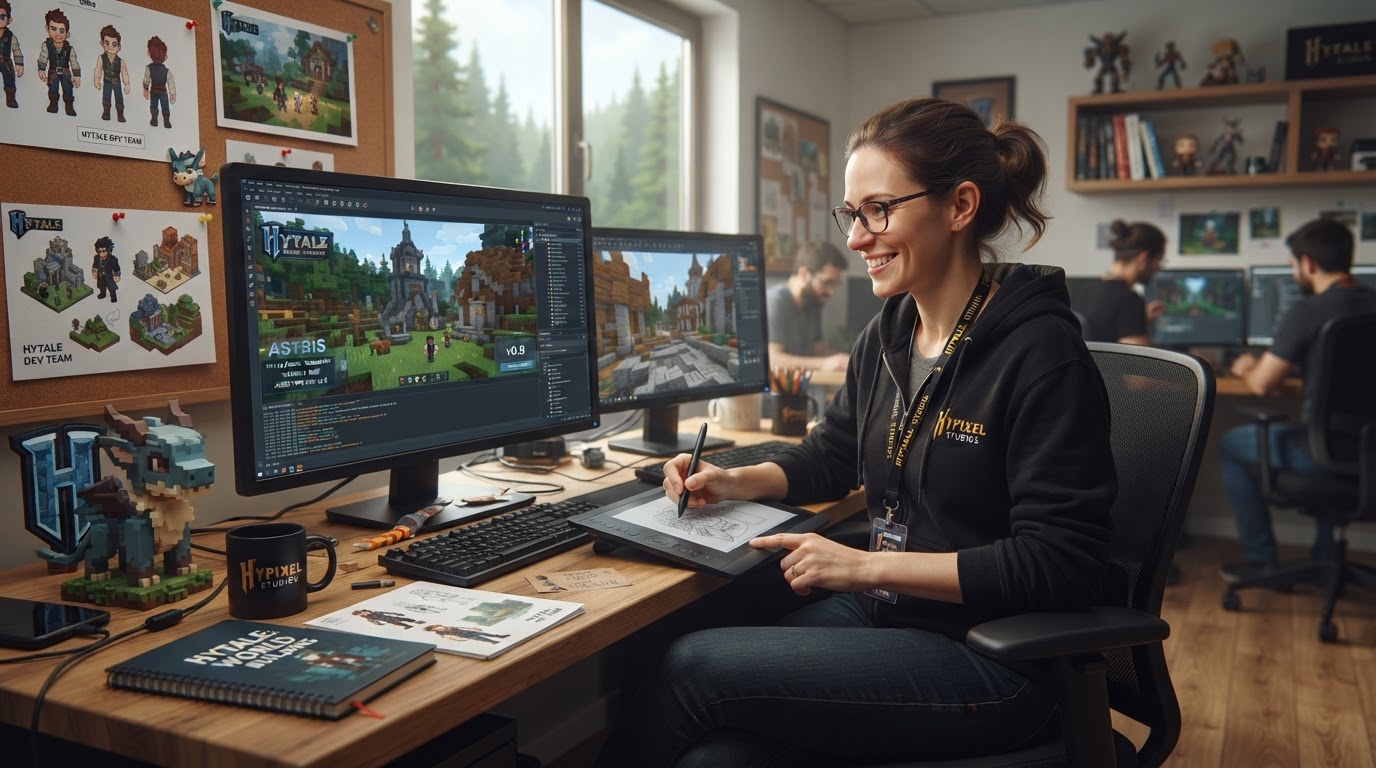
Working on Hytale is a multifaceted endeavor characterized by an unwavering commitment to empowering creators, a philosophy of rapid iterative development, and the navigation of significant technical challenges with remarkable transparency. Hypixel Studios developers are building a game that is not just played, but also extensively modified and expanded upon by its community, often using the very same tools the internal team employs.
This article provides an in-depth look into the developer insights, outlining the core mechanics, development workflows, guiding philosophies, and the valuable lessons learned from past hurdles.
Building Hytale: Core Mechanics and Creator Empowerment
At the heart of Hytale’s development lies a foundational principle: to create an incredibly flexible and creator-friendly engine. Developers aim for a design where “nothing is rigidly hard-coded,” ensuring that both the internal team and the broader modding community can effectively “build Hytale within Hytale.”
Modding and Scripting: Tools for Every Creator
- Extensive In-Game Tools: Hytale is designed to ship with a comprehensive suite of in-game tools that are identical to those used by Hypixel Studios themselves. This includes an asset editor for managing game resources, a model editor for creating characters and objects, an asset node editor for complex configurations, a prefab editor for constructing reusable structures, and item spawning tools for populating the game world.
- Visual Scripting System: To democratize game development, Hytale incorporates a visual scripting system. Described as node-based, this intuitive interface allows non-programmers to define complex NPC behaviors, establish environmental rules, and create interactive elements without needing to write a single line of code. This significantly lowers the barrier to entry for aspiring game designers and modders.
Data-Driven Design: Flexibility and Rapid Iteration
A cornerstone of Hytale’s adaptability is its data-driven design. Almost all game content, from individual blocks and items to complex NPCs and prefabs, is defined using human-readable JSON files. This approach offers several critical advantages:
- Easy Modification: Developers and modders can easily inspect, understand, and modify game content by editing these JSON files.
- Hot-Reloading: Coupled with this data-driven structure is the capability for “hot-reloading.” This powerful feature allows changes made to JSON files to be instantly reflected in the game without requiring a server restart, dramatically accelerating the iteration cycle for content creators.
Engine Architecture: Performance and Moddability
The technical architecture underpinning Hytale’s server is meticulously crafted for both performance and extensibility:
- Entity Component System (ECS): The server’s core relies on an ECS, a design pattern that prioritizes data and behavior separation. This approach optimizes memory usage and runtime performance, avoiding the bottlenecks often associated with traditional object-oriented programming.
- JSON for Configuration: As mentioned, JSON serves as the primary data configuration layer, providing a clear and accessible structure for all game content.
- Modular Plugin System: The server incorporates a modular Plugin System, which allows for extensive extensions and modifications. This design provides modders with unparalleled freedom to introduce new systems, custom combat mechanics, and elaborate minigames, ensuring the game can evolve far beyond its initial release.
Creative Mode: The Ultimate Creation Environment
Hytale’s Creative Mode is more than just a sandbox; it’s a comprehensive development environment for players and modders alike. It offers a suite of powerful tools:
- Terrain Shaping Tools: Features like Scripted Brushes allow for precise and artistic manipulation of the game world’s topography.
- Prefab Creation and Modification: Users can easily design, build, and modify reusable structures and scenes.
- Precision Placement: Advanced controls ensure accurate positioning of blocks and assets.
- Cinematic Content Creation: In-game Machinima tools enable players to create high-quality cinematic sequences, further blurring the lines between player and developer.
Exact Steps: Iteration, Community Integration, and Technical Workflows
The development process at Hypixel Studios is characterized by rapid iteration, a close relationship with the modding community, and specific technical workflows designed for efficiency and extensibility.
“Build Hytale Within Hytale”: A Guiding Philosophy
This core philosophy dictates that any feature or tool developed by the internal team for Hytale’s creation automatically becomes available to the modding community. This ensures a consistent experience and empowers external creators with the same capabilities as the developers.
Workflow for Mod Creation
For community modders, the process typically involves several key steps and tools:
- Content Definition: Understanding and manipulating the JSON file structures for defining custom blocks, items, NPCs, and other game content.
- 3D Modeling and Animation: Utilizing tools like Blockbench, which is specifically designed for Hytale-style voxel art, to create custom models and animations.
- Server-Side Plugins: For more complex modifications, developers leverage Java to write powerful server-side plugins that can introduce entirely new game systems, combat mechanics, or minigames.
- Automated Workflows: GitHub workflows are established for building, releasing, and publishing Hytale plugins. These systems enable automated compilation against new server versions and streamlined asset uploading, ensuring mod compatibility and ease of distribution.
Reversion to the Legacy Engine: A Pivotal Decision
A significant and transparent step in Hytale’s recent development was the decision to abandon an experimental C++ engine rewrite. This ambitious rewrite, intended for cross-platform compatibility, proved to be an “unwieldy” undertaking that led to considerable development delays and technical debt. The team ultimately reverted to the original C# client and Java server architecture (referred to as the “Legacy Engine”).
This strategic move allowed Hypixel Studios to:
- Leverage Existing Content: Immediately access years of previously developed content, accelerating the path to early access.
- Utilize Community Knowledge: Tap into the extensive modding knowledge already present within the community, which was familiar with the Java-based server.
- Consolidate Development: This reversion involved a massive “Merge of 300 Branches” of dormant feature development, bringing years of work back into a cohesive, shippable state.
Agile Approach: Responsiveness and Adaptability
While some community discussions have linked the term “scrappy” with potential workflow issues, Hypixel founder Simon Collins-Laflamme has clarified the studio’s intentional approach:
“We’re building a scrappy, agile team full of people who actually make things.”
This indicates a deliberate move towards a responsive and adaptable development style, prioritizing practical output and quick iteration over rigid, bureaucratic processes.
Developer Philosophy and Community Engagement
The Hytale development team operates under a distinct philosophy that prioritizes community, transparency, and a long-term vision for the game.
Embrace Community Talent
Hypixel Studios actively seeks to hire from the modding community, creating a direct “bridge” where exceptional community creations can lead to collaboration or even full-time employment. This strategy not only brings passionate and skilled individuals into the team but also reinforces the studio’s commitment to its player base.
Transparency and Early Access
The team is remarkably transparent about the game’s state. They openly admit that the early access game “isn’t good yet” and acknowledge that some features are released “half-baked on purpose.” This approach isn’t a sign of neglect, but a deliberate strategy to:
- Gather Feedback: Encourage the community to provide critical feedback that shapes the game’s evolution.
- Build a “Forever Game”: Foster a collaborative development process aimed at creating a title with enduring appeal and continuous improvement.
Focus on Foundational Systems
Developers prioritize building a robust and stable foundation over rushing out numerous progression systems. They believe that introducing complex features too early could distract from the core vision and create technical debt. A strong, flexible engine and core mechanics are seen as essential for long-term growth and future content expansion.
Learning from Limitations
Having previously pushed the Minecraft engine to its absolute limits with their popular Hypixel server, the team intimately understood the frustrations of working within another company’s code. This experience was a primary motivator for building their own engine from scratch, specifically designed to overcome creative limitations and provide unparalleled freedom for modders.
Common Mistakes: Learning from Development Hurdles
The journey of Hytale’s development has not been without significant challenges and acknowledged missteps, offering valuable lessons for the team and the broader game development community.
The Failed Engine Rewrite: A Major Setback
The most prominent and publicly acknowledged mistake was the decision to undertake a complete engine rewrite in C++ for cross-platform compatibility. This ambitious project led to:
- “Development Hell”: Significant delays and a prolonged period of unproductive work.
- Ballooning Costs and Technical Debt: The rewrite consumed vast resources and created substantial technical overhead.
- Developer Burnout: The immense pressure and lack of progress took a toll on the development team.
- Project Cancellation: Ultimately, this C++ engine was deemed “unwieldy” and the project was canceled by Riot Games in June 2025, as the team struggled to replicate the original Java build’s functionality and content.
Overly Ambitious Scope
Early in development, Hytale aimed to be “everything to everyone from Day 1” and release on all platforms simultaneously. This “overly ambitious scope” was a significant factor in the initial development failures, as it resulted in nothing being fully finished and spread resources too thin.
Workflow Issues and Over-planning (Community Concerns)
Some community members have raised concerns about potential “workflow issues” and “over-planning” within the studio. These concerns suggest that development processes might be overly complicated by too many checks and prototypes, even for seemingly simple features. Such observations have arisen from the perceived slow progress on certain features that appeared game-ready years prior.
Neglecting Optimization for a More Optimal Engine
A developer concern highlighted that abandoning the C++ engine, while necessary for the game’s revival, might mean missing out on significant performance gains. This decision could potentially limit Hytale’s future growth into primary demographics, especially as it competes with highly optimized titles in the genre.
Technical Bugs and Instability in Early Access
Developers are transparent that the early access build is “rough,” “unfinished,” and “buggy.” This candid admission reflects the reality of rushing to release (even with a legacy engine). Common technical issues reported by players include:
- Game crashes and connection problems.
- UI rendering issues, such as “Unknown Node Type” crashes or “Failed to Apply CustomUI” crash loops.
These issues often stem from specific parsing limitations or incorrect data handling within the game’s underlying code, which the team is actively working to address.