
Guide
Hytale Dungeons: How They’re Generated and What’s Inside
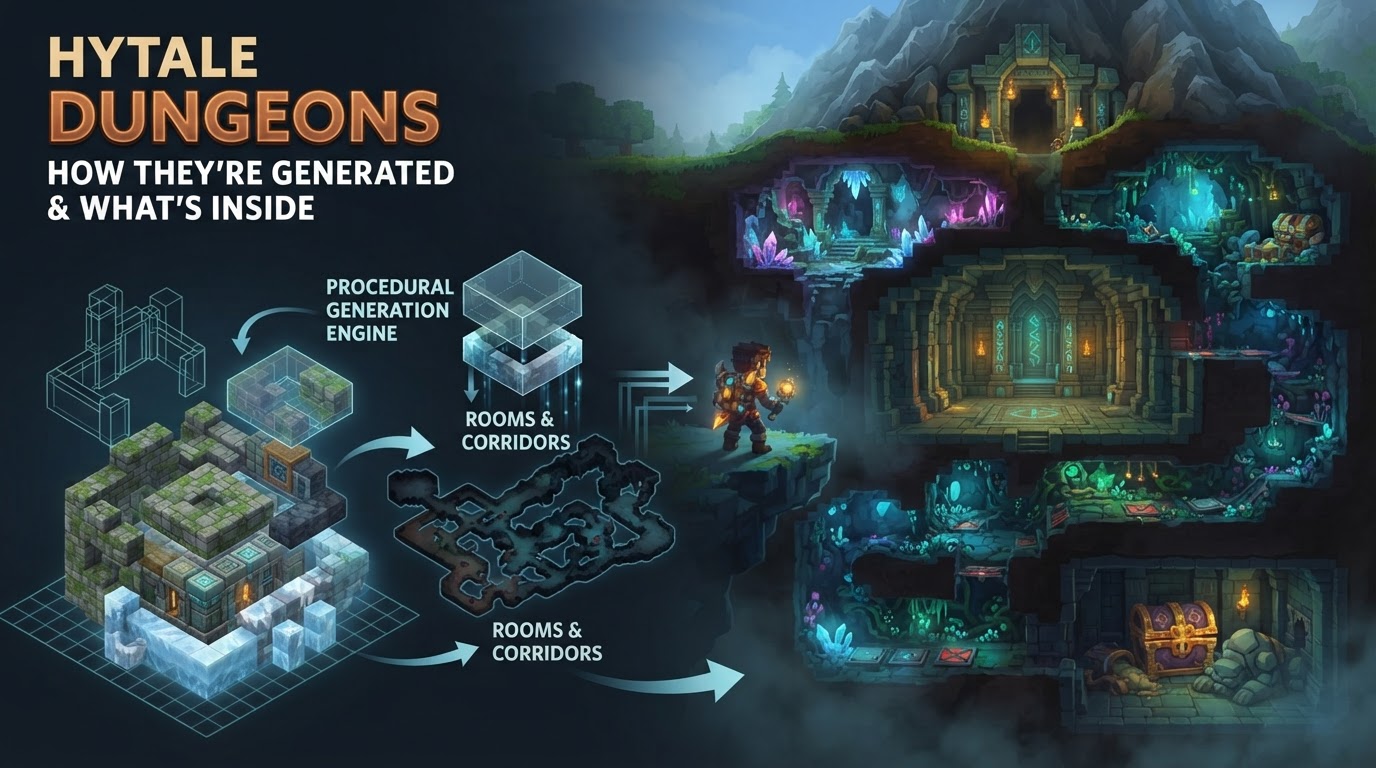
Hytale’s dungeons are a cornerstone of its adventure gameplay, offering a dynamic blend of procedurally generated underground networks and intricately hand-crafted, instanced challenges. This dual approach ensures both high replayability and deeply immersive, story-driven encounters, each providing distinct dangers and rewards.
How Hytale Dungeons Are Generated
Hytale utilizes sophisticated world generation technology that combines algorithmic design with pre-built content modules to create its diverse dungeon experiences. This system primarily divides dungeons into two distinct categories:
1. Procedural Dungeons (The Underground)
These dungeons form the vast, sprawling underground networks players will encounter as they explore the world. They are designed to integrate seamlessly with the natural terrain, creating a sense of organic discovery.
- Generation Mechanics: Procedural dungeons are automatically generated using algorithms that weave together natural terrain features with “prefabs.” Prefabs are pre-designed modules representing specific rooms, corridors, traps, enemy encounters, and points of interest. The system selects and arranges these prefabs based on defined rules, ensuring varied layouts and challenges.
- Caves: A significant component of procedural generation, caves are 100% procedurally generated and adapt their characteristics based on the biome they are in (e.g., snowy, jungle, desert). They feature a free, chaotic, and natural structure, serving as the backbone for underground exploration. These areas are rich in common resources, unique creatures, minor secrets, and mini-events crucial for early to mid-game equipment progression.
- Replayability: Due to their procedural nature, each exploration of an underground dungeon or cave system offers a unique environment, layout, and set of challenges, leading to virtually endless replayability.
- Danger & Loot: Generally, these dungeons present low to medium danger. They are excellent sources for basic resources such as ores, crafting scrolls, and foundational gear.
2. Portal Dungeons (The Instance)
In stark contrast to procedural dungeons, Portal Dungeons are meticulously hand-crafted zones. These are often linked to dimensional portals and are typically marked by imposing entrance structures on the surface, such as the “Tower of Gaia.”
- Generation Mechanics: Rather than being generated on the fly, Portal Dungeons are pre-designed levels. When a player or party enters, they are transported to a dedicated instance, a separate copy of the dungeon just for them.
- Structure & Content: These dungeons adhere to strict design rules, featuring carefully scripted combat encounters, intricate puzzles, and environmental hazards. They are often home to multi-phase boss fights that require strategic thinking and coordinated teamwork.
- Block Interaction Limitations: A key characteristic of Portal Dungeons is the limited ability for players to break blocks. This design choice forces players to engage with the dungeon’s challenges as intended, relying on combat skills and puzzle-solving rather than bypassing obstacles through digging.
- Danger & Loot: Portal Dungeons represent the highest tier of danger in Hytale, ranging from high to extreme. The rewards reflect this challenge, offering the most coveted loot in the game, including legendary blueprints, powerful unique weapons, and rare artifacts.
- Examples: Corrupted Towers are a prime example of Portal Dungeons. These dangerous instances are heavily guarded by void entities, featuring escalating challenges across multiple floors and culminating in powerful bosses that drop rare corrupted materials.
Underlying World Generation Technology
Hytale’s world generation is driven by a data-driven, modifier-based system. The “WorldGenModifier” system allows developers and modders to alter biomes, caves, and structures using priority-ordered modifiers. Prefabs, which include elements of both procedural and Portal Dungeons, are pre-built structures placed during generation according to specific rules like spacing, altitude, and biome requirements. While the game will launch with a V1 engine, a more advanced V2 engine is in development to enable even more complex, designer-led worlds and procedural architecture for future dungeon content.
Exact Steps for Generation (Developer/Modder Insight)
While players experience the results, the actual generation process for procedural dungeons involves a structured approach:
- Prefab Design: Developers create individual “room templates” or prefabs for various dungeon components. These include start rooms, corridors, combat arenas, treasure chambers, and boss rooms. Each prefab is designed with consistent dimensions and defined connection points to allow for seamless linking.
- Prefab Loading & Caching: A “Room Manager” system loads and caches these pre-built prefab templates into memory, making them readily available for the generation process.
- Algorithmic Placement: A “Generator” algorithm then selects and places these rooms. It follows a set of predefined rules that dictate room types, their order, spacing, and connection logic. The generator calculates the precise positions for each prefab, tracks spawned entities within them, and manages any necessary cleanup patterns to ensure a cohesive dungeon structure. This chaining of prefabs creates the randomized yet coherent layouts players explore.
What’s Inside Hytale Dungeons
Regardless of their generation method, dungeons in Hytale share common structural elements and offer specific types of content:
- Entrances: These can range from easily visible structures to hidden passages, protected by guardians, or triggered by specific in-world events.
- Intermediate Chambers & Corridors: These make up the bulk of the dungeon, filled with various enemies, environmental traps, and interactive elements.
- Modular Encounters: Players will face mini-boss encounters, multi-phase combat scenarios, and puzzle rooms that require observation and problem-solving.
- Final Room: Most dungeons culminate in a significant challenge, often a powerful boss creature or a complex puzzle guarding the primary reward.
- Rewards: The ultimate goal of dungeon exploration. Rewards include rare loot, powerful artifacts, unique crafting materials, and blueprints that unlock advanced crafting recipes.
As of the anticipated Chapter 1 update (targeted within a few months of July 2026), Hytale will introduce its first major dungeon. This dungeon is confirmed to feature a rich blend of environmental hazards, extensive exploration, engaging puzzles, diverse enemy encounters, and a challenging multi-phase boss fight, promising unique rewards for those who overcome its trials.
Tips for Dungeon Exploration
To maximize your success and survival in Hytale’s dungeons, consider these practical tips:
- Preparation is Crucial: Before venturing into any challenging dungeon, especially Portal Dungeons, ensure you are adequately equipped. This includes having appropriate tier armor (e.g., Iron for Zone 1, Steel for Zone 2), a supply of healing totems or potions, and food buffs to enhance health regeneration and stamina. Torches are indispensable for illuminating dark areas and spotting hidden traps.
- Understand Dungeon Types: Recognize the fundamental differences. Procedural Dungeons are excellent for general resource gathering and exploration, offering unpredictable layouts. Portal Dungeons are structured, story-rich challenges with scripted events and the game’s best loot. Tailor your approach and expectations accordingly.
- Group Up for Dangerous Dungeons: Many of the most perilous dungeons, particularly those radiating corruption or void energy, are designed for cooperative play. Forming a party with skilled players will significantly increase your chances of success against powerful enemies and complex mechanics.
- Prioritize Loot Progression: Dungeons are a primary engine for character progression. Focus on acquiring blueprints, as these unlock crafting recipes for powerful gear and items that cannot be obtained through other means.
- Adapt and Learn: Hytale’s dungeons will often present unique challenges. Be prepared to adapt your strategies, learn enemy attack patterns, and work with your team to overcome obstacles.
Common Mistakes & Uncertainties
Navigating Hytale’s dungeons effectively means avoiding common pitfalls and understanding current development status:
- Underestimating Preparation: A frequent mistake is entering high-danger dungeons, particularly Portal Dungeons, without sufficient armor, healing supplies, and beneficial food buffs. This often leads to swift and frustrating defeats.
- Ignoring Block Interaction Limitations: In Portal Dungeons, the inability to break most blocks means players cannot simply dig around obstacles or enemies. This requires direct engagement with the dungeon’s intended challenges, including combat and puzzle mechanics.
- Treating All Dungeons Equally: Assuming a uniform experience across all dungeon types is a mistake. Each type has varying difficulty levels, generation methods, and specific objectives. A casual approach to a Portal Dungeon will likely end poorly.
- Speculative “First Come, First Serve” Mechanics (Uncertain): Earlier community discussions (circa 2019) speculated about mechanics like open dungeon doors indicating a previously raided area, or glowing lanterns signifying uncleared sections. It’s important to note that these were community analyses from early development and may not reflect the final game mechanics. Players should verify such details upon release.
- Outdated Information on Content: As of June 2026, while many dungeon-related assets were present in game files, formal boss encounters and full dungeons were not publicly detailed. However, a July 2026 update confirmed that Hytale Chapter 1 will introduce its first major dungeon with a multi-phase boss, indicating active implementation of core dungeon content. Always refer to the latest official announcements for accurate content information.