
Guide
What Is Voxel-Based Gaming? Hytale as a Case Study
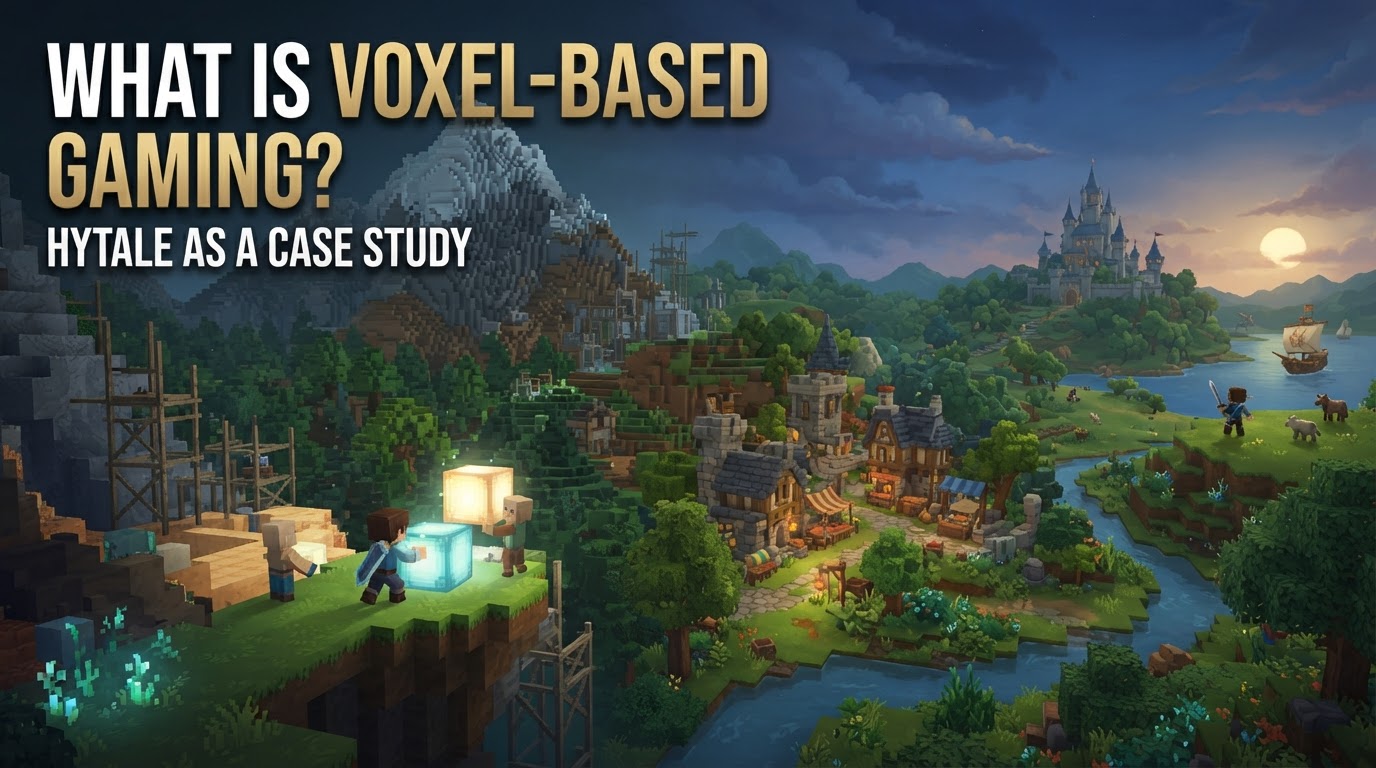
Voxel-based gaming fundamentally utilizes “voxels,” which are three-dimensional volumetric pixels, as the foundational building blocks of their game worlds, offering an inherently volumetric and often highly destructible and constructible environment. This approach contrasts sharply with traditional polygon-based graphics that define surfaces, instead representing a value on a regular 3D grid.
What Is Voxel-Based Gaming?
At its core, voxel-based gaming is about building worlds from tiny, three-dimensional cubes or other geometric shapes, much like a digital equivalent of LEGO bricks. Each voxel holds specific data, such as material type, color, or even physical properties. This granular approach allows for environments that are not merely surfaces but possess true volume, enabling unprecedented levels of environmental interaction and modification.
Voxels vs. Polygons
To understand voxels, it’s helpful to briefly contrast them with polygons. Most modern games render environments using polygons, which are flat, two-dimensional surfaces (typically triangles) that are stitched together to form the exterior of 3D models. These models are defined by their vertices and edges, creating a shell. While highly efficient for rendering smooth, complex surfaces, polygon-based worlds are generally not designed for real-time, large-scale environmental destruction or construction, as modifying a polygon mesh is computationally intensive and often results in visual artifacts.
Voxels, conversely, define volume. Imagine a 3D grid filling a space; each cell in that grid is a voxel. If a cell contains a material, it’s a solid voxel; if it’s empty, it’s air. This means that when you dig into a voxel world, you are literally removing volume, and when you build, you are adding volume. This inherent volumetric nature is the primary advantage and defining characteristic of voxel-based games.
Core Advantages of Voxel Engines
- Volumetric Representation: Worlds have true depth and mass, not just surfaces. This enables complex geological formations, deep caves, and overhangs that are difficult to achieve with heightmap-based terrain.
- Destructibility and Constructibility: The ability to easily add, remove, or modify individual voxels makes environments highly malleable. Players can dig tunnels, build structures block-by-block, and terraform landscapes with precision.
- Procedural Generation: Voxel engines are well-suited for procedural content generation, as rules can be applied to the 3D grid to create diverse and expansive worlds efficiently.
- Stylized Aesthetics: While some voxel games aim for realism, many embrace a distinct, often retro-inspired or stylized aesthetic that leverages the blocky nature of voxels.
Hytale as a Case Study: Modern Voxel Gaming
Hytale, the highly anticipated sandbox RPG developed by Hypixel Studios, serves as a compelling case study for modern voxel-based gaming. Officially launched into Early Access on January 13, 2026, after a complex development history that included a brief cancellation in June 2025 and subsequent repurchase, Hytale leverages the power of voxels to create a rich, interactive, and expansive world.
Hytale’s Voxel Mechanics
World Generation
Hytale’s world, Orbis, is procedurally generated, designed to offer diverse biomes, creatures, and structures while maintaining a coherent rather than chaotic feel. The voxel nature of the engine allows for the creation of complex 3D terrain features like dramatic overhangs, intricate cave systems, and natural arches that would be challenging to achieve with traditional heightmap-based terrain. The system allows designers to bias the generator towards meaningful patterns, with “World Gen V2” as a future iteration aiming for even more advanced and deliberate world design.
Environmental Manipulation
A core advantage of Hytale’s voxel engine is the extensive potential for in-game building and destroying. The game embraces this with features supporting block-by-block construction, allowing players to meticulously craft structures. Advanced terraforming tools further empower players to reshape the environment dynamically, fostering creativity and strategic interaction with the world.
Art Style
Hytale’s voxels contribute to a distinctive stylized aesthetic. It combines a modern voxel look with retro pixel-art textures, creating visuals that are both clean and charming. This art style is not only visually appealing but also facilitates rapid asset development, allowing for a vast array of unique environmental elements and creatures.
Gameplay Loop
The game blends open-ended sandbox freedom with a structured RPG progression. The voxel environment is integral to this, as exploration, resource gathering, and building are central to the gameplay loop. Progression is tied to crafting and exploration, allowing players to expand their capabilities and unlock new areas within the voxel world.
Combat
Hytale features skill-driven, action-focused combat with distinct mechanics for melee, ranged, and magic. The three-dimensional voxel environment plays a crucial role in combat, emphasizing positioning, timing, and environmental awareness. Players can use the terrain to their advantage, creating defensive structures or ambushing foes.
Modding and User-Generated Content
Hytale is designed from the ground up to be a “mod-first” title, providing extensive in-game tools for user-generated content. This includes an asset editor, model editor, prefab editor, and a Blockbench plugin for 3D modeling. The game employs a server-side modding paradigm, where a closed-source C# client renders the world, but all game logic and mod content run on a Java-based server. An Entity Component System (ECS) architecture further enhances modding flexibility, allowing creators to define custom behaviors and interactions within the voxel world.
How Players Interact with Hytale’s Voxel World
Players typically engage with Hytale’s voxel-based world through a series of intuitive and interconnected actions:
- Exploration: Traverse the procedurally generated world of Orbis, discovering diverse biomes, dungeons, secrets, and encountering various creatures and monsters within the volumetric landscape.
- Resource Gathering: Mine blocks, gather materials, and collect resources directly from the environment by interacting with its voxel components.
- Building & Crafting: Utilize collected resources to craft gear, items, and construct structures block by block, or by using specialized tools and pre-fabricated elements in creative modes, fully leveraging the constructible nature of the voxel engine.
- Combat: Engage in strategic combat against various threats, using a combination of melee, ranged, and magic abilities, often utilizing the 3D environment for tactical advantage.
- Progression: Unlock new crafting recipes, upgrade workbenches, and enhance character abilities through an RPG-like progression system, often driven by exploration and completing quests in the Adventure mode, which guides players through the voxel world.
- Modding (for creators): Use in-game tools like the Hytale Model Maker (or Blockbench plugin) and the prefab editor to create custom 3D objects, animations, and even modify game mechanics. Mod content, including models, textures, sounds, and UI layouts, is streamed from the server to the client, integrating seamlessly into the voxel environment.
Tips for Hytale Players and Modders
For Players:
- Embrace Progression: Hytale guides players with clear systems. Engage with its RPG elements to unlock new capabilities and content, rather than treating it as a purely open-ended sandbox.
- Master Combat: Combat is skill-driven; understand the nuances of melee, ranged, and magic, as well as environmental positioning, to succeed in encounters.
- Resource Management: Efficiently gather and manage resources for crafting and building to ensure smooth progression and avoid bottlenecks.
- Optimize Settings: Adjust game settings and controls to improve your gameplay experience, especially for navigation and precise block placement within the voxel world.
- Explore Thoughtfully: While exploration is key, be mindful of dangerous areas and unlock systems that make exploration feel like meaningful progress rather than aimless wandering.
For Modders/Developers:
- Utilize Official Tools: Leverage the official Blockbench plugin for 3D modeling and other in-game asset creation tools provided by Hypixel Studios. These are designed for optimal integration with Hytale’s voxel engine.
- Understand Server-Side Modding: Be aware that game logic and mod content run on the Java-based server. This impacts how client-side functionality and interactions can be modified.
- ECS Architecture: Design mods around Hytale’s Entity Component System (ECS) for greater flexibility and easier sharing of behaviors between entities, promoting modular and scalable mod development.
- Start Small: When developing new features, begin with narrow prototypes to ensure a good core loop before expanding, helping to manage complexity in a voxel environment.
Common Challenges and Mistakes
General Voxel Game Development:
- Performance Issues: Rendering a high number of small voxels or dynamic environments can be computationally intensive. Optimization is crucial to prevent performance problems.
- Physics Integration: Integrating realistic physics with voxel environments can be complex, as traditional physics engines are often designed for polygon-based geometry.
- Repetitive Gameplay: Without well-designed systems and diverse content, the block-based nature of voxel worlds can sometimes lead to repetitive gameplay loops.
Hytale (especially Modding and Early Play):
- Inefficient Crafting & Resource Management: Players may make poor choices in crafting or resource collection that significantly slow down their progression in the Adventure mode.
- Bad Mod Prioritization/Unstable Combinations: Installing too many mods without considering their compatibility or actual utility can lead to overcomplicated builds, resource draining, and even game instability or crashes.
- Ignoring Progression Systems: New players often rush into dangerous areas or overlook essential upgrades and settings, hindering their early game experience and making the game unnecessarily difficult.
- Overcomplicating Builds: Focusing on overly complex creations without efficient tools or a solid understanding of the building system can be frustrating and time-consuming.
- Limited Modding Scope (Uncertainty): Some developers express concern that Hytale’s server-side modding architecture, while simplifying asset streaming, might limit the depth of certain client-side gameplay modifications (e.g., custom movement) compared to a fully client-executable scripting environment. This could be a potential mistake if the official modding API doesn’t expand its capabilities sufficiently over time.
- Expecting Immediate Perfection (Early Access): As an Early Access title, Hytale is still unpolished and actively developing. Players should expect bugs, unfinished systems, and ongoing changes, and approach the game with that understanding.