
Guide
Hytale vs Valheim: A Sandbox Survival Comparison
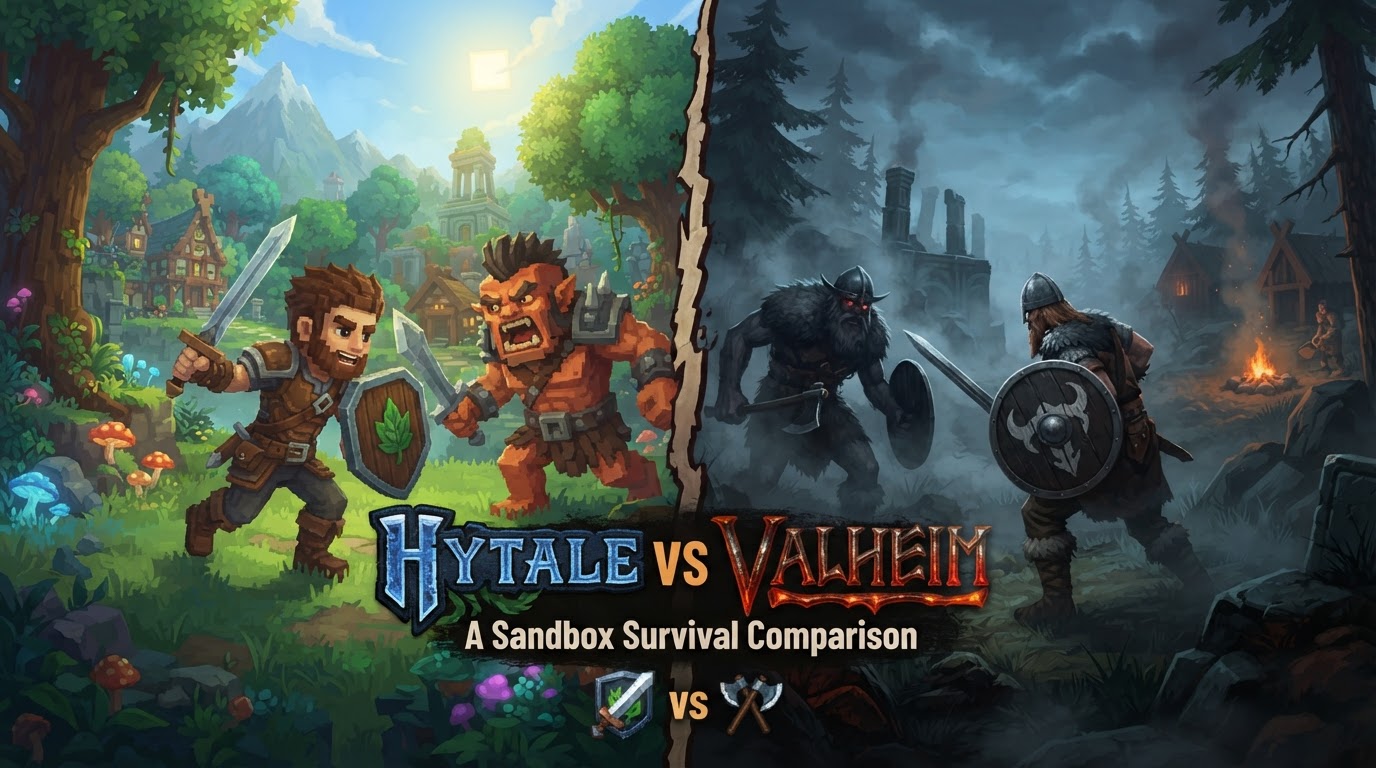
While both Hytale and Valheim offer expansive sandbox survival experiences, their core philosophies diverge significantly: Hytale leans into a structured, RPG-driven adventure with block-based building, even in its Early Access “Exploration Mode,” while Valheim provides a challenging, biome-gated Viking survival journey that emphasizes resource management and boss progression.
Hytale: A Sandbox Adventure with RPG Structure
Hytale, which officially launched into Early Access on January 13, 2026, for Windows PC, introduces players to a vibrant, procedurally generated world called Orbis. Its initial “Exploration Mode” offers a robust survival experience, with future updates promising a full “Adventure Mode” featuring a scripted story and competitive multiplayer. The game seamlessly blends block-based construction with action-oriented RPG combat and a distinct progression system.
Core Mechanics of Hytale
- Crafting: Hytale boasts a deep and intuitive crafting system. Players will discover numerous recipes and utilize various specialized workbenches, such as the basic Workbench, Blacksmith Anvil, Armorer’s Workbench, Builder’s Workbench, Furnace, and Arcanist’s Workbench, each vital for advancing through different tiers of items and equipment.
- Building: Construction is a cornerstone of Hytale. Players can erect intricate structures block by block, benefiting from an intuitive interface that simplifies the creative process.
- Combat: Combat in Hytale is skill-driven and action-focused. It demands careful stamina management, strategic positioning, and an understanding of weapon-specific mechanics across melee, ranged, and magic attacks.
- Exploration & Progression: The world of Orbis is divided into distinct, procedurally generated zones or biomes. Progression is notably structured, guiding players through increasingly challenging areas, which sets it apart from more aimless sandbox experiences.
- Survival Elements: Hytale is often described as a “sandbox adventure game” rather than a traditional “survival game.” This implies that mechanics like hunger and thirst, while present, may not be as punishing or central to gameplay as in other survival titles.
Exact Steps & Progression in Hytale
- Awakening & Initial Tools: Players begin in a dilapidated temple. The first tasks involve gathering basic resources such as sticks, fibers, and loose stones. Crude tools like a hatchet, pickaxe, and sword can be crafted directly from the inventory.
- First Workbench & Shelter: The next crucial step is to craft and place a Workbench, requiring 4 logs and 3 stones. This unlocks the ability to craft more advanced items and other specialized workbenches. Players should prioritize establishing a basic shelter and crafting a Crude Bedroll to skip nighttime, when stronger monsters are more prevalent.
- Unlocking Memories: Progression is guided by the “Memories” system. Players must visit the “Forgotten Temple,” marked on the map, and pass through a portal to unlock these memories, which are key to advancing the narrative and unlocking new content.
- Resource Gathering & Upgrades: Players will then venture into caves to mine copper, followed by iron found in deeper sections. These metals are essential for crafting better gear and upgrading existing crafting benches to higher tiers, expanding recipe availability and possibilities.
Tips for Hytale Players
- Prioritize crafting your initial Workbench; it is the foundation for all subsequent crafting stations and upgrades.
- Familiarize yourself with the different workbenches early on, as each unlocks specific crafting tiers and item categories.
- Actively engage with the “Memories” system; it serves as your primary guide for progression through the world.
- Always secure a safe shelter before nightfall, as the creatures that emerge after dark are significantly more dangerous.
Common Mistakes in Hytale (Early Access Considerations)
- Expecting Traditional Survival Mechanics: Players might mistakenly anticipate deep hunger, thirst, or temperature mechanics to be as punishing as in other survival games. Hytale’s focus appears to be more on adventure and RPG progression.
- Aimless Wandering: While a sandbox, Hytale utilizes a zone-based progression system. Ignoring these structured guides and wandering aimlessly might lead to slower or less fulfilling advancement.
Valheim: A Viking Survival Journey
Valheim, having officially released its 1.0 version on September 9, 2026, after a successful five-year Early Access period, offers a challenging and immersive Viking-themed survival experience. The 1.0 update introduced the Deep North biome, new items, weapons, armor, tools, creatures, building pieces, and mechanics like inventory upgrades and a grappling hook. The game places a strong emphasis on exploration and progression through increasingly dangerous biomes.
Core Mechanics of Valheim
- Crafting: Valheim’s crafting is deeply resource-driven. New recipes are typically discovered by picking up new materials. It requires various crafting stations, including the Workbench, Forge, Stonecutter, Cauldron, Artisan Table, Black Forge, Galdr Table, and newer additions like the Frost Kiln. Stations often require upgrades to craft higher-tier items, and equipment repairs are conveniently free at the correct station.
- Building: Building in Valheim is flexible and robust but requires proximity to a Workbench. A key mechanic is structural integrity, where pieces need proper support to prevent collapse.
- Combat: Combat is skill-based and demanding, requiring careful stamina management for attacks, blocking, and dodging. Well-timed parries are crucial, as they can stagger enemies, leaving them vulnerable to critical hits. Different weapon types deal specific damage (e.g., blunt, pierce) that are more effective against certain enemy types.
- Exploration & Progression: Progression is intricately tied to biomes and boss defeats. Players must overcome the boss of one biome to unlock key resources or systems necessary to survive and thrive in the next, following a clear and challenging progression path.
- Survival Elements: Survival is a critical aspect. Food is essential, not just to prevent starvation, but to temporarily increase maximum health and stamina. Players can have three different food effects active simultaneously. The “Rested” buff, gained from sleeping in a comfortable shelter, provides significant boosts to stamina and health regeneration, making it vital for efficiency. Indoor fires require proper ventilation (chimneys) to prevent smoke inhalation damage.
Exact Steps & Progression in Valheim
- Meadows Start: Players begin in the relatively safe Meadows biome. Initial tasks involve gathering wood, stone, and flint, hunting boar and deer for food and hides, building a Workbench, and crafting basic tools like an axe, club, and hammer. Establishing a basic shelter with a bed and fire is essential to gain the “Rested” buff.
- First Boss (Eikthyr): Explore the Meadows to find runestones (Vegvisir) that reveal the location of Eikthyr, the first boss. Defeating Eikthyr rewards players with an item that unlocks the ability to craft a pickaxe.
- Black Forest & Bronze Age: With a pickaxe, players can venture into the Black Forest to mine copper and tin ore. These are smelted into ingots and combined at a Forge to create bronze, which is used for the next tier of weapons, armor, and tools.
- Biome Progression: The core gameplay loop involves progressing through a sequence of increasingly dangerous biomes: Black Forest, Swamp, Mountains, Plains, Mistlands, Ashlands, and finally Deep North. Each biome introduces new enemies, resources, and a boss whose defeat unlocks the path to the next stage of progression.
- Forward Bases: As players explore further from their main base, building smaller forward bases with portals, repair stations, and storage becomes vital for managing expeditions and resource transport.
Tips for Valheim Players
- Prioritize “Rested” Buff: Always ensure you have the “Rested” buff active before embarking on any significant exploration, combat, or resource gathering, as it significantly boosts stamina and health regeneration.
- Food Management: Eat three different types of food to maximize your health and stamina. Tailor your food choices to your current activity (e.g., stamina-focused for mining, health-focused for combat).
- Repair Gear Regularly: Repair your tools and equipment frequently; repairs are free at the appropriate crafting station. This prevents gear from breaking at critical moments.
- Prepare for Biomes: Do not rush into new, more dangerous biomes without sufficient gear upgrades, appropriate food, and a thorough understanding of the local threats.
- Master Combat: Learn to parry enemy attacks effectively. A well-timed parry can stagger opponents, leaving them vulnerable to critical hits.
- Ventilate Fires: When building indoors, always ensure your campfire has a way for smoke to escape (e.g., a chimney or vent) to avoid dangerous smoke damage to your character.
- Use the Map: Mark important locations like resource nodes, dungeons, and points of interest on your map for easier navigation and return trips.
Common Mistakes in Valheim
- Ignoring the “Rested” Buff: Venturing out without this crucial buff severely handicaps your efficiency and survivability, especially in combat.
- Neglecting Gear Repairs: Forgetting to repair gear can lead to weapons breaking mid-fight or tools becoming unusable during crucial tasks, often resulting in death or significant setbacks.
- Underestimating New Biomes: Rushing into higher-tier biomes unprepared (e.g., with low-tier gear, insufficient food, or at night) almost guarantees a swift and frustrating death.
- Poor Base Planning: Building a large, unoptimized base too early or in a critical resource spawn area can hinder progress and require significant rebuilding later.
- Not Eating Properly: Failing to consume three types of good food for adequate health and stamina makes combat and demanding tasks much harder and more dangerous.
- Ignoring Stamina in Combat: Running out of stamina during a fight leaves you unable to attack, block, or dodge, making you an easy target for enemies.
- Discarding Unknown Materials: Throwing away unfamiliar resources can lead to needing to re-farm them later when new recipes are discovered. Hold onto everything until you know its purpose.
Hytale vs Valheim: Key Differences and Similarities
While both games offer compelling sandbox survival, their approaches create distinct experiences:
- Progression Philosophy: Hytale, even in Early Access, presents a more structured, RPG-like progression system, guiding players through zones and a “Memories” system. Valheim, conversely, features a challenging biome-based progression where defeating bosses is the gateway to new resources and areas, creating a more linear, but open-world, challenge curve.
- Survival Emphasis: Valheim places a much heavier emphasis on traditional survival mechanics. Food is critical for health and stamina, the “Rested” buff is indispensable, and environmental hazards like smoke inhalation are real threats. Hytale, described as a “sandbox adventure,” may feature survival elements, but they are likely less punishing and central to the core gameplay loop.
- Crafting & Building: Both games offer deep crafting systems with multiple specialized workbenches. Hytale’s system is clearly defined by tiered upgrades and recipe discovery. Valheim’s crafting also involves upgradeable stations, but new recipes are often learned simply by acquiring new materials. Building in Hytale is intuitive and block-based; Valheim adds a layer of complexity with structural integrity mechanics.
- Combat Style: Both games feature skill-driven, action-focused combat requiring stamina management. Hytale incorporates melee, ranged, and magic attacks within an RPG framework. Valheim’s combat heavily emphasizes parrying, blocking, and understanding weapon damage types against specific enemy vulnerabilities.
- Game State: This is a crucial distinction. Valheim has reached its 1.0 release, meaning its core mechanics and content are established and polished. Hytale is in Early Access, meaning its features, mechanics, and content are subject to significant change and expansion as development continues. Players engaging with Hytale should expect an evolving experience.
Ultimately, Hytale appeals to players seeking a more structured adventure with strong RPG elements and creative building, even in its early state. Valheim is ideal for those who crave a challenging, resource-intensive survival experience with a clear boss progression, set in a harsh but rewarding Viking world.