
Guide
Hytale Crafting System: A Complete Breakdown
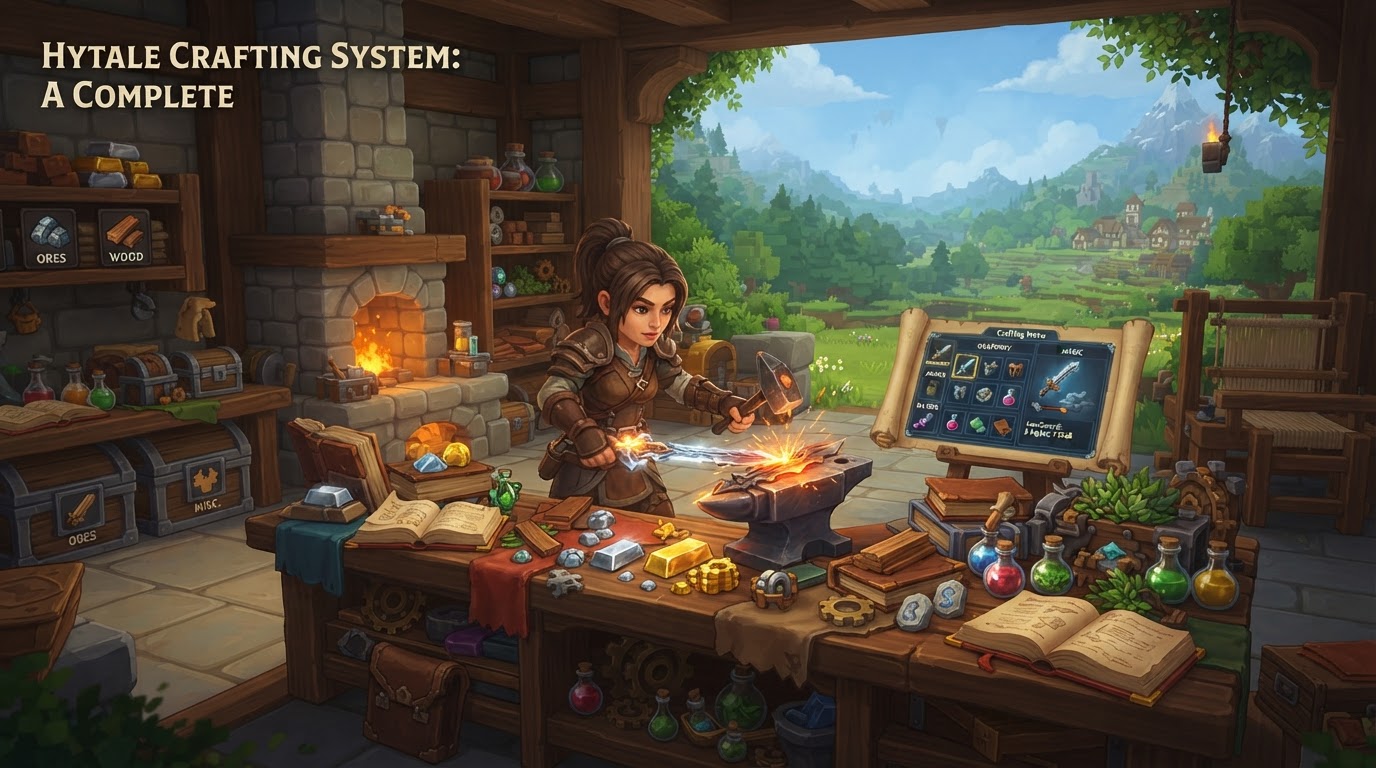
Hytale’s crafting system is a dynamic and essential mechanic, evolving from immediate inventory-based item creation to a complex, tiered system requiring specialized workbenches and strategic resource management. It’s designed to provide continuous progression, ensuring players always have new items to discover and craft as they explore and advance through the world.
Understanding Hytale’s Crafting Pillars
Crafting in Hytale is built upon two fundamental methods, each serving distinct purposes in your journey:
Pocket Crafting (Inventory Crafting)
This is your most immediate and accessible crafting method. Available directly from your inventory screen (typically accessed by pressing ‘Tab’), Pocket Crafting allows you to combine basic materials into essential items without needing a dedicated crafting station. It’s invaluable for early survival, enabling you to create foundational tools, temporary shelters, and most importantly, your first workbench.
Workbench-Based Crafting
The vast majority of Hytale’s items, from advanced tools and weapons to intricate armor, powerful consumables, and complex structures, are crafted at specialized workbenches. These stations are placed in the world, usually within your base, and become increasingly sophisticated as you progress. Each workbench typically focuses on a category of items, demanding specific materials and often requiring upgrades to unlock higher-tier recipes.
Key Features of Hytale’s Crafting System
- Material-Driven Progression: Every crafted item demands specific raw materials. From common wood and stone to rare ores, exotic fibers, and powerful essences, gathering resources is the backbone of all crafting.
- Tiered Gear and Items: Hytale employs a clear tiered system for equipment and items (e.g., Wood, Stone, Copper, Iron, Thorium, Cobalt, Adamantite, Mithril). Advancing through these tiers requires not only better materials but also upgraded crafting stations capable of handling them.
- Recipe Discovery: Recipes aren’t all immediately available. Many are unlocked automatically as you upgrade workbenches, but others are discovered through exploration, finding blueprints in dungeons, completing quests, or even interacting with NPCs.
- Crafting Range and Storage Integration: A significant quality-of-life feature, workbenches can pull required materials from nearby chests within a certain radius. This streamlines the crafting process, reducing the need to constantly move items between storage and your inventory.
- Item Durability and Repair: Crafted tools, weapons, and armor have durability. As they are used, they degrade. Items can be repaired at specific stations, consuming resources but extending their lifespan.
- Salvaging for Resources: The Salvager’s Workbench allows players to break down unwanted or obsolete items. This process reclaims a portion of the original component materials, providing a way to recycle and manage inventory efficiently.
Hytale Crafting: A Step-by-Step Guide
1. Initial Survival with Pocket Crafting
Your journey begins with immediate needs, met through your inventory’s Pocket Crafting interface.
- Open Your Inventory: Press ‘Tab’ to access your character’s inventory and the Pocket Crafting grid.
- Gather Basic Materials: Collect readily available resources like Rubble (small stones), Plant Fiber, and Sticks from the environment.
- Craft Essential Starter Tools: Place the collected materials into the Pocket Crafting grid. For example:
- Crude Hatchet: Combine 2x Rubble, 2x Plant Fiber, 2x Sticks.
- Crude Pickaxe: Similar combinations of Rubble, Plant Fiber, and Sticks.
- Crude Sword: Another basic combination for early defense.
- Crude Bedroll: 3x Plant Fiber, 2x Light Hide (from early creatures) for setting a temporary spawn point.
- Campfire: 4x Sticks, 2x Rubble for light and basic cooking.
- Craft Your First Workbench: This is the most crucial step for progression. Use Pocket Crafting to create a Workbench. While exact recipes can vary during development, common early game recipes involve basic wood and stone elements (e.g., 3x Sticks and 2x Rubble, or 4x Tree Trunks and 4x Stone).
2. Advancing with Workbench-Based Crafting
Once you have a Workbench, your crafting capabilities expand dramatically.
- Place Your Workbench: Deploy the crafted Workbench in a convenient location, ideally near where you plan to store resources.
- Interact with the Workbench: Approach the workbench and interact with it to open its dedicated crafting interface.
- Ensure Material Availability: Make sure all required materials are either in your inventory or in nearby chests within the workbench’s crafting range.
- Select and Craft: Browse the available recipes, often categorized by tabs (e.g., Survival, Tools, Crafting, Tinkering). Select the item you wish to create and click ‘Craft’.
- Specialized Workbenches: As you progress, you’ll need to craft and upgrade a variety of specialized stations:
- Furnace: Essential for smelting ores into ingots. (Recipe example: 6x Tree Trunks, 6x Stone).
- Armorer’s Workbench: For crafting armor.
- Blacksmith’s Anvil: For advanced metalworking, tools, and weapons.
- Alchemist’s Workbench: For potions and chemical concoctions.
- Arcanist’s Workbench: For magical items and enchantments.
- Farmer’s Workbench: For agricultural tools and seed processing.
- Salvager’s Workbench: For breaking down items into components.
- Chef’s Stove: For advanced cooking and food preparation.
- Tanning Rack: For processing hides into leather.
- Smelting with the Furnace: Place fuel (e.g., sticks, wood logs, charcoal) in the fuel slot and raw ores (e.g., Copper Ore, Iron Ore) in the input slot. The furnace will then convert the ores into usable ingots, which are crucial for many higher-tier recipes.
Tips for Efficient Crafting
- Consistent Resource Gathering: Make resource collection a routine part of your exploration. Always gather wood, stone, ores, and fibers, even if you don’t immediately need them.
- Prioritize Early Tools: Craft Crude Pickaxes and Hatchets via Pocket Crafting as soon as possible. These significantly accelerate initial resource gathering.
- Strategic Base Layout: Design your base with crafting efficiency in mind. Place workbenches and storage chests close together to fully utilize the crafting range feature.
- Batch Crafting: Before embarking on a crafting project, identify all required materials, gather them in one go, process them (e.g., smelt ores), and then craft items in batches to save time.
- Early Furnace Investment: Craft a Furnace quickly. Ingots are a bottleneck for many mid-game items, so establishing a steady supply early is key.
- Timely Workbench Upgrades: Upgrade your workbenches as soon as you meet the material requirements. This unlocks new recipes and allows access to higher-tier gear.
- Repair vs. New: Always evaluate the cost of repairing existing gear versus crafting a brand-new item. Sometimes, a repair is more resource-efficient.
- Engage with NPCs: NPCs can offer quests, trade opportunities, and sometimes provide blueprints or insights into new crafting possibilities.
Common Mistakes to Avoid
- Delaying Basic Tool Crafting: Not crafting crude tools early will make resource gathering a slow, frustrating grind, hindering your overall progression.
- Hoarding Resources Indefinitely: While resource management is good, excessively hoarding materials without using them for upgrades or new gear will slow your progress. Use your resources to advance!
- Random Workbench Upgrades: Don’t upgrade workbenches haphazardly. Prioritize upgrades that align with your immediate needs (e.g., better tools, stronger armor for a specific zone).
- Ignoring the Salvager’s Workbench: Letting unwanted items clutter your inventory or simply discarding them means losing valuable component materials that could be reclaimed.
- Rushing into High-Level Zones Unprepared: Entering dangerous areas without adequately upgraded weapons, armor, and tools will lead to frequent deaths and frustration. Match your gear to the challenge.
- Building a Permanent Base Too Soon: Committing to a large, elaborate base early on can be inefficient. You might discover better locations, encounter unexpected threats, or change your long-term needs as you explore.
- Overlooking Essence of the Void: This resource, or similar specialized components, is often crucial for high-tier crafting. Ensure you understand its acquisition and importance.
- Tedious GUI Crafting for Bulk Items: Be aware that for items crafted slowly in large quantities, keeping the crafting interface open might be restrictive. While the system may evolve, plan for this potential limitation.