
Guide
Hytale Concept Art: The Evolution of Orbis
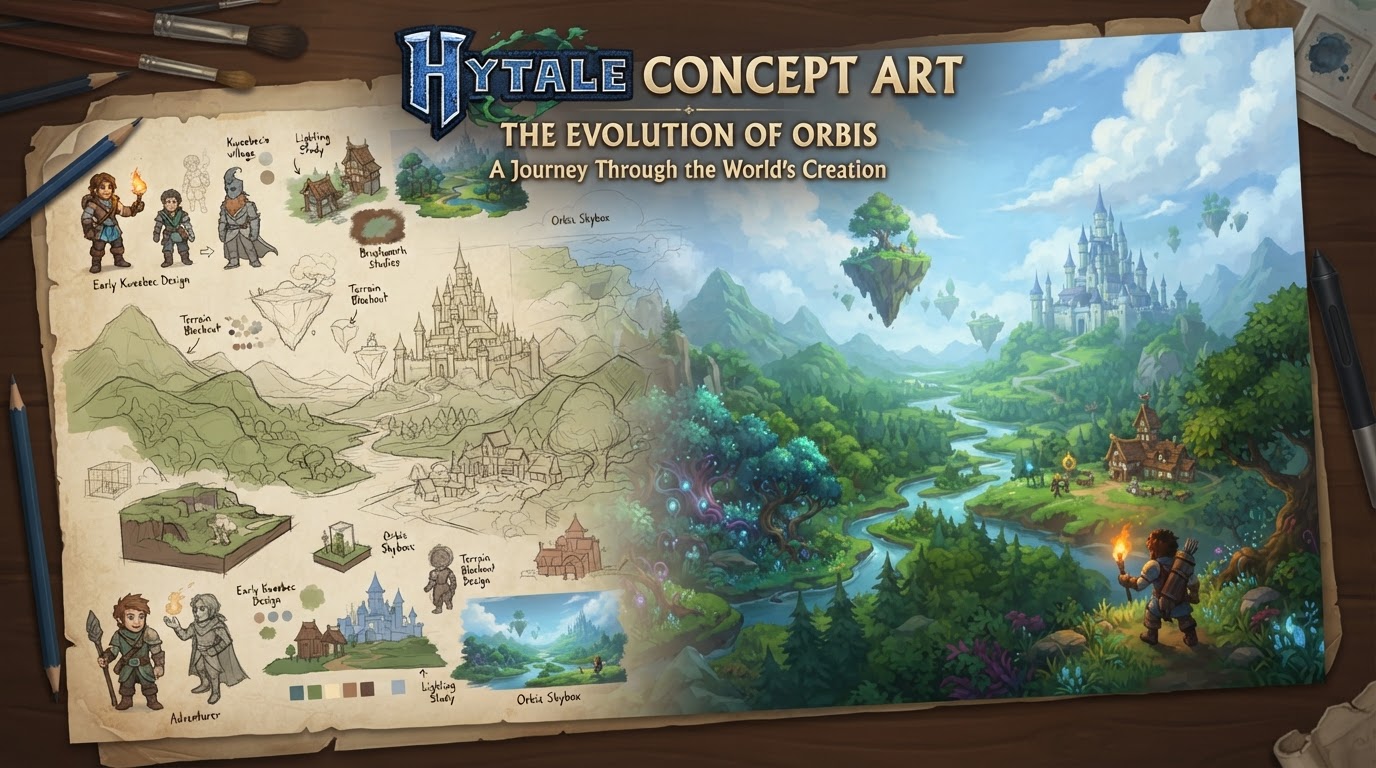
Hytale’s concept art serves as the foundational blueprint for Orbis, its vast and diverse world. Far from being mere illustrations, these artistic visions guide the complex procedural generation systems, ensuring that every biome, zone, and landscape feels intentionally designed and cohesive, even as it offers endless variation.
Understanding Orbis: A Procedurally Guided World
At the heart of Orbis’s design is a sophisticated procedural generation system that aims to merge the expansive possibilities of algorithmic world-building with the curated feel of handcrafted environments. Concept art is paramount in this process, providing the visual and thematic targets that the generation mechanics strive to achieve.
- Noise Maps: These are the fundamental mathematical engines that create the basic topography of Orbis. Concept art provides the visual cues for what kind of terrain (e.g., jagged mountains, rolling hills, deep valleys) these noise maps should be configured to produce. Multiple noise maps are combined and adjusted to achieve the desired geographical features envisioned by artists.
- Layering: Once the foundational terrain is set, concept art dictates the composition of its surface and subsurface. Layers, also driven by noise maps, specify where particular block types should appear, how they should cluster, and how they transition from one material to another, such as rock giving way to soil or ice.
- Covers: These are the smaller, environmental details like surface foliage, scattered rocks, or underground moss. Concept art defines the aesthetic of these elements and their distribution rules, ensuring they enhance the biome’s overall look and feel.
- Prefabs: Pre-designed structures, objects, and points of interest (like ruins, dungeons, or unique trees) are known as prefabs. Concept art is crucial for their design, ensuring they fit seamlessly into the world’s aesthetic and contribute to the lore and gameplay experience of their respective zones.
This system empowers artists and designers to shape environments through intuitive tools, translating their creative visions into procedural rules without requiring extensive coding. Concept art is the primary language used to communicate these visions to the development team and the generation engine.
Defining the Zones: Orbis’s Diverse Regions
Orbis is not a monolithic world; it is divided into distinct “zones,” each a massive, procedurally generated region with its own identity, elemental affinity, unique factions, deep lore, and escalating difficulty. Concept art is instrumental in establishing these identities from the earliest stages of development.
- Visual Identity: Concept art for zones like the verdant Emerald Grove, the arid Howling Sands, the frozen Whisperfrost Frontiers, or the desolate Devastated Lands showcases their unique color palettes, geological formations, flora, and architectural styles. This art defines the ‘feel’ of each zone, from its skybox to its deepest caves.
- Biome Clusters: Within each zone, concept art further refines the visual language for various biomes. For instance, the Emerald Grove might contain lush forests, tranquil rivers, and ancient ruins, each with specific visual characteristics detailed in concept art.
- Lore and Atmosphere: Beyond mere visuals, concept art conveys the story and atmosphere of a zone. A piece depicting a crumbling fortress in the Devastated Lands communicates danger and ancient conflict, guiding the design of enemies, quests, and environmental storytelling within that region.
- Elemental Affinity: Each zone is tied to an elemental power. Concept art helps visualize how these elemental forces manifest in the environment, from the glowing flora of a nature-aligned zone to the crystalline structures of an ice realm.
These conceptualizations ensure that as players traverse Orbis, they experience a clear progression and distinct changes in environment, challenge, and narrative.
The Iterative Journey: Concept Art’s Evolution in Practice
The evolution of Orbis through concept art is not a linear path but an iterative process of creation, refinement, and adaptation. It reflects the dynamic nature of game development, especially for a project as ambitious as Hytale.
Initial Visioning: Laying the Groundwork (circa 2019)
Some of the earliest public concept art for Hytale, released around 2019, provided the first glimpses into the distinct zones of Orbis. These initial pieces were crucial for:
- Establishing Core Identities: They visually differentiated the initial four zones, giving a strong sense of their unique aesthetics and atmospheres. This early art served as a foundational visual dictionary for the development team.
- Underground Topography: Importantly, this early art also began to illustrate how the underground environments would transition and change between zones, hinting at the seamless, interconnected nature of Orbis’s vertical and horizontal exploration. This was vital for planning dungeon generation and resource distribution.
- Setting the Tone: These initial concepts helped solidify the overall artistic direction for Hytale, blending a vibrant, stylized aesthetic with elements of adventure and mystery.
This phase is about broad strokes, defining the core appeal and visual language of the world.
Refinement and Adaptation: Ongoing Development (circa 2021 and Beyond)
As development progresses, concept art continues to evolve. An update in 2021, for example, highlighted “two new pieces of key art” showcasing the evolution of Orbis. This indicates that concept art is a living document, constantly being updated and refined for several reasons:
- Responding to Gameplay Needs: As gameplay mechanics are finalized, concept art may be revised to better support player interaction, combat scenarios, or quest design.
- Technical Feasibility: Early concepts might be highly ambitious. As the engine and tools mature, concept artists work closely with engineers to ensure their visions are technically achievable within the game’s constraints and performance targets. This can lead to adjustments in detail, scale, or complexity.
- Expanding Scope: Hytale’s scope has expanded over time. New ideas, biomes, creatures, or structures require new concept art to integrate them cohesively into the existing world.
- Iterative Design: Art, like all aspects of game development, benefits from iteration. Feedback from internal playtests or team discussions can lead to revisions that improve clarity, atmosphere, or visual appeal.
This ongoing refinement ensures that the visual design remains consistent and compelling as the game takes shape.
Impact of Development Challenges
It is important to acknowledge that Hytale’s development has faced significant challenges, including engine reboots and an expanding scope. These factors mean that very early concept art, while foundational, may not perfectly reflect the current state or final vision of the game. Concept art in such a context acts as a dynamic guide, subject to reinterpretation and evolution alongside the project itself, always striving towards the ultimate player experience.
Translating Vision to Reality: Concept Art’s Influence on Generation Mechanics
The connection between concept art and Orbis’s procedural generation is direct and symbiotic. Concept art doesn’t just inspire; it provides concrete parameters for the world-building algorithms.
- Block Palettes and Textures: Concept art defines the primary and secondary block types for each biome and zone, guiding the creation of texture sets and material properties.
- Density and Distribution Rules: An artistic rendering of a dense forest or a sparsely populated desert informs the procedural system on how densely to place trees, rocks, or other environmental features.
- Structural Archetypes: For prefabs, concept art provides detailed visual guides for their architecture, scale, and integration into the terrain. This ensures that generated structures align with the lore and aesthetic of their zone.
- Atmospheric Elements: While not directly generated by blocks, concept art for weather, lighting, and skyboxes influences the overall atmospheric parameters that the game engine applies to different zones.
The goal is always to make the procedurally generated world feel as if it were meticulously handcrafted, a testament to the power of artistic vision guiding complex algorithms.
Key Principles for Understanding Orbis’s Design
To fully appreciate the evolution of Orbis through concept art, consider these guiding principles:
- Procedural Design Philosophy: Orbis is designed to offer a unique experience with each playthrough while maintaining a consistent artistic and thematic identity. Concept art is key to achieving this balance between randomness and intentional design.
- Zone Diversity: Each zone is a comprehensive ecosystem, not just a change in scenery. Its concept art encapsulates not only visuals but also the implied gameplay, challenges, and narrative elements players will encounter.
- Artistic Intent: The world generation tools are designed to empower artists. This means that the beauty and coherence of Orbis are a direct result of artistic direction, translated through powerful technology.
Addressing Common Misconceptions about Orbis
As development continues, some aspects of Orbis are subject to change or clarification:
- Finite vs. Infinite World: While early concept art might suggest a contained world, Hytale’s world actually generates infinitely outwards horizontally. The vertical limits (how deep or high players can go) are currently not publicly detailed.
- Placeholder Content: Some zone names and specific content descriptions are considered placeholders and may evolve before the final release. Concept art for these areas would also be subject to revision.
- Seed Limitations: While a world seed ensures consistent terrain generation for a given world, it does not dictate dynamic elements such as mob spawns, player-built structures, or the specific loot found in containers.
The continuous evolution of Orbis through concept art is a testament to Hypixel Studios’ commitment to creating a world that is both expansive and deeply immersive, guided by a clear artistic vision from its earliest sketches to its final implementation.